The Question: How do you bring cross-functional alignment between global and regional functions in strategy building?
Quick Answer: To ensure cross-functional alignment across global and regional functions, you need a shared strategic spine (vision, values, non-negotiables) combined with localized flexibility (regional charters, playbooks, KPIs). Alignment happens when everyone knows what must remain global, what can flex locally, and how decisions are made.
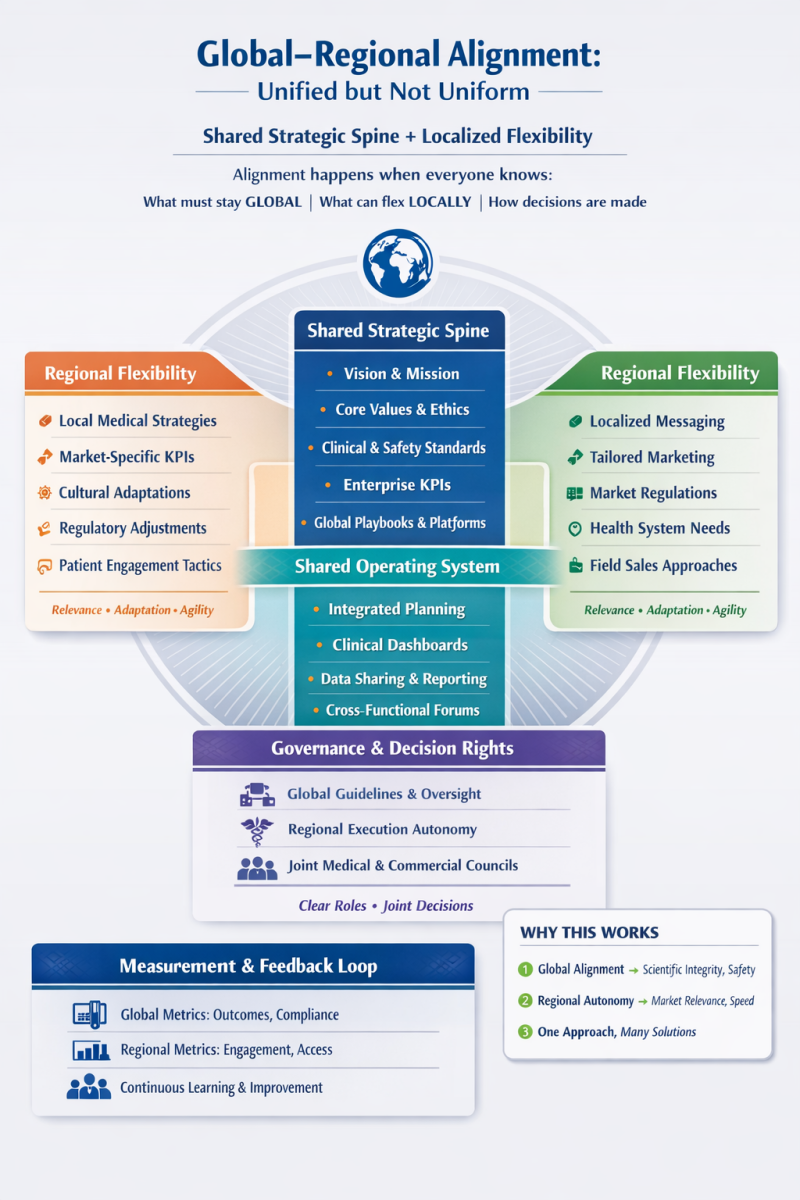
🌍 Key Principles for Global–Regional Alignment
- Define the “global spine”: Establish enterprise-wide priorities, brand values, and success metrics that are non-negotiable. This ensures consistency across all markets
- Create regional charters: Document what each region can adapt—language, culture, offers, and execution style—while staying true to the global framework
- Balance consistency and autonomy: Clarify what must remain uniform (e.g., brand identity, compliance standards) and where local teams can innovate (e.g., messaging, delivery style)
- Shared operating system: Use common calendars, playbooks, and reporting models so regions move in sync, avoid duplication, and learn from one another
- Cultural fluency: Build language and cultural competency into rollout plans to avoid resistance and ensure adoption
- Unified communication channels: Encourage transparent communication across functions—regular forums, digital platforms, and cross-regional workshops to build trust and reduce silos
🛠 Practical Steps
- Global Blueprint
- Define offers, audiences, and messaging centrally.
- Provide clear KPIs and reporting structures.
- Regional Adaptation
- Allow regions to tailor campaigns to local realities (laws, cultural norms, consumer behavior).
- Empower local leaders with decision rights within defined boundaries.
- Governance & Decision-Making
- Establish a governance model: who decides what, at which level.
- Use steering committees or councils with representation from both global HQ and regional teams.
- Measurement & Feedback Loops
- Track both global metrics (e.g., enterprise growth, brand consistency) and regional metrics (e.g., local engagement, compliance).
- Share learnings across regions to refine strategies continuously.
- Technology & Platforms
- Invest in shared collaboration tools (playbook libraries, dashboards, reporting systems).
- Ensure accessibility across time zones and languages.
🚀 Why This Works
- Global alignment ensures credibility, efficiency, and brand consistency.
- Regional autonomy ensures relevance, adoption, and agility in diverse markets.
- Together, they create a “unified but not uniform” strategy—anchored in shared goals but flexible enough to thrive in different contexts
👉 For more on how we’re addressing this challenge, contact us.
Add comment
Comments